
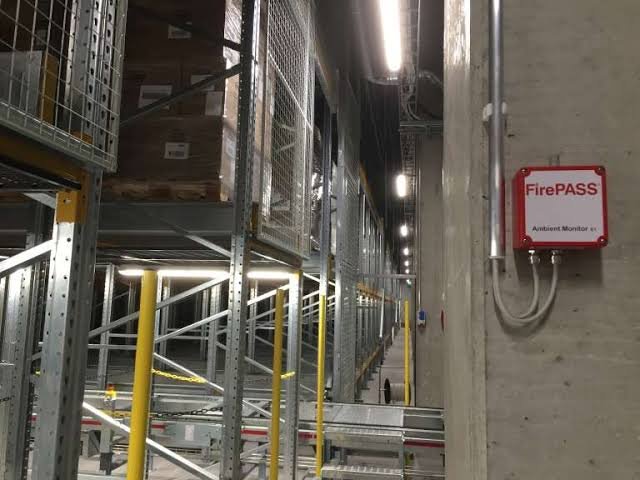
Warehouses are essential to modern business. They store everything from food, clothing, furniture, electronics, chemicals, packaging materials, and spare parts to industrial equipment. But the same storage conditions that make a warehouse useful can also make a fire extremely difficult to control.
Large quantities of combustible materials, high storage racks, electrical equipment, forklifts, batteries, generators, loading areas, and sometimes flammable liquids can create several fire hazards within one building. If a fire starts, densely packed goods can allow flames and smoke to spread quickly.
For warehouses in Pakistan, fire safety should therefore be treated as an ongoing responsibility rather than something considered only after an incident. Pakistan’s Building Code – Fire Safety Provisions 2016 requires buildings and structures to be arranged, equipped, maintained, and operated to provide reasonable levels of life safety and property protection from fire hazards. It also places responsibilities on owners, operators, lessees, and occupants.
The National Disaster Management Authority (NDMA) also maintains dedicated Urban Fire Safety Guidelines, reflecting the importance of fire prevention and preparedness in Pakistan.
This guide explains the essential warehouse fire-safety measures that owners, managers, and workers should understand.
Why Warehouse Fire Safety Is Different
A warehouse is not simply a large room filled with products.
It may contain different fire hazards in different sections, including:
- Electrical distribution equipment
- Packaging materials
- Wooden pallets
- Plastic products
- Paper and cardboard
- Textiles
- Cooking or heating equipment
- Batteries and charging stations
- Fuel-powered machinery
- Flammable liquids
- Gas cylinders
- Loading and unloading equipment
Storage height also matters. Products stored on high racks can make firefighting more complicated and may allow a fire to grow vertically.
Another challenge is accessibility. If aisles become blocked by goods, workers may struggle to escape and emergency responders may have difficulty reaching the source of the fire.
Good warehouse fire safety therefore requires a combination of prevention, detection, suppression, evacuation, maintenance, and employee training.
1. Start With a Warehouse Fire-Risk Assessment
The first step is understanding what could cause a fire and what could make it spread.
A fire-risk assessment should consider the building, stored products, electrical systems, machinery, work processes, people, and emergency arrangements.
Ask questions such as:
- What materials are stored?
- Are any materials flammable?
- How high are goods stacked?
- Where are the electrical panels?
- Are forklifts or batteries used?
- Are welding or hot-work activities performed?
- Where are fuel and chemicals stored?
- How quickly can employees evacuate?
- Are emergency exits accessible?
- Can firefighters reach the building easily?
The assessment should be reviewed whenever the warehouse layout, products, equipment, or operations change.
2. Keep Combustible Materials Under Control
A warehouse naturally contains combustible products, but unnecessary combustible waste should never be allowed to accumulate.
Cardboard, plastic wrapping, damaged pallets, paper, textile scraps, and packaging waste can provide additional fuel for a fire.
Good housekeeping means:
- Removing waste regularly
- Keeping aisles clear
- Separating waste from ignition sources
- Avoiding unnecessary piles of packaging
- Maintaining clean areas around electrical equipment
- Keeping storage organized
The goal is not to remove every combustible item from a warehouse. That is usually impossible. The goal is to prevent unnecessary materials from increasing the size and speed of a potential fire.
3. Maintain a Reliable Fire Alarm System
Early detection can make an important difference during a warehouse fire.
A properly designed and maintained fire alarm system in Pakistan can help detect a fire and alert occupants so that evacuation and emergency response can begin as quickly as possible.
Depending on the warehouse’s design and risks, a fire alarm arrangement may include:
- Smoke detectors
- Heat detectors
- Manual call points
- Audible alarms
- Visual alarm devices
- Fire alarm control panels
- Monitoring or communication interfaces
The appropriate detection technology depends on the environment. A dusty warehouse, cold-storage area, high-ceiling facility, or location with machinery may require different considerations from a conventional office.
Regular maintenance is essential. The Building Code of Pakistan specifically requires owners or persons in control of buildings to maintain records of inspections, maintenance, and testing of fire protection and fire alarm systems as required by the authority having jurisdiction.
Never ignore repeated alarm faults or disable detectors simply because they produce unwanted alarms. The underlying cause should be investigated by appropriately qualified personnel.
4. Keep Fire Extinguishers Accessible
Portable extinguishers provide an important first line of defence when a small fire is discovered.
However, having extinguishers somewhere inside the warehouse is not enough.
They should be:
- Appropriate for the fire hazards present
- Clearly identified
- Easily accessible
- Properly maintained
- Protected from physical damage
- Free from obstruction
Different fire risks may require different types of extinguishing equipment. Electrical equipment, ordinary combustible materials, cooking oils, and flammable liquids do not necessarily require the same extinguishing method.
Employees should also know where extinguishers are located and understand that extinguishers should only be used when the fire is small, escape remains possible, and they have received appropriate training.
If there is significant smoke, rapid fire growth, or uncertainty about the situation, evacuation should take priority.
5. Keep Storage Racks and Aisles Organized
Poor storage can turn a manageable fire into a much larger emergency.
Avoid stacking products randomly or allowing goods to spill into aisles.
Maintain suitable clearances and storage arrangements according to the warehouse’s design, fire-protection system, product characteristics, and applicable requirements.
Important areas include:
- Emergency exits
- Fire doors
- Fire extinguishers
- Fire alarm devices
- Sprinkler heads
- Electrical panels
- Emergency equipment
- Access routes for emergency responders
Do not place boxes or pallets in front of emergency equipment.
A warehouse should always have enough clear space for employees to move toward exits without unnecessary obstacles.
6. Do Not Block Sprinkler Systems
Where automatic sprinkler protection is installed, storage arrangements should not interfere with sprinkler performance.
Changing rack heights, adding new shelving, or storing products closer to sprinkler heads can affect the way a suppression system operates.
This is one reason warehouse layouts should not be changed casually.
Before making major changes to storage height, rack configuration, or product type, management should determine whether the existing fire-protection system remains appropriate.
Fire-protection equipment should be installed, used, inspected, and maintained according to its approved design, manufacturer instructions, and applicable requirements.
7. Inspect Electrical Systems Regularly
Electrical equipment is an important consideration in almost every warehouse.
Potential problems include:
- Damaged cables
- Loose connections
- Overloaded circuits
- Faulty electrical panels
- Improper extension cords
- Damaged machinery
- Poor maintenance
- Dust accumulation around equipment
Electrical panels should remain accessible and should not be surrounded by stored products.
Employees should report burning smells, unusual heat, sparks, damaged cables, repeated circuit trips, or other electrical abnormalities immediately.
Electrical maintenance should be performed by appropriately qualified personnel.
8. Manage Forklifts and Battery Charging Areas
Forklifts are common in warehouses and can introduce additional fire and electrical hazards.
Battery charging areas deserve particular attention.
Keep charging areas:
- Properly organized
- Free of unnecessary combustible materials
- Suitable for the batteries and equipment being used
- Adequately ventilated where required
- Protected from accidental damage
Charging equipment, cables, plugs, and batteries should be inspected regularly.
For fuel-powered forklifts, fuel storage and refuelling procedures should also be carefully controlled.
Employees operating forklifts should receive appropriate training and follow workplace safety procedures.
9. Store Flammable Liquids Carefully
Some warehouses contain paints, solvents, fuels, cleaning products, chemicals, or other flammable materials.
These products should not simply be stored alongside ordinary goods without considering their specific hazards.
Use suitable containers and follow the product manufacturer’s storage instructions.
Keep flammable products away from:
- Open flames
- Sparks
- Hot machinery
- Smoking areas
- Uncontrolled electrical sources
- Excessive heat
Where special storage cabinets, rooms, ventilation, spill controls, or other protective measures are required, these should be incorporated into the warehouse’s safety plan.
10. Control Hot Work
Welding, cutting, brazing, grinding, and other hot-work activities can create sparks and intense heat.
A warehouse should not allow hot work to begin without proper precautions.
Before work starts:
- Remove unnecessary combustible materials.
- Protect nearby goods from sparks.
- Keep appropriate fire extinguishing equipment nearby.
- Inspect the surrounding area.
- Confirm that workers are suitably trained.
- Follow an appropriate hot-work permit or authorization process where required.
- Monitor the area after the work has ended.
Sparks can travel into nearby storage areas, gaps, drains, or concealed spaces. A fire may therefore begin some distance away from where hot work actually took place.
11. Keep Emergency Exits Clear
During an emergency, employees should not have to move pallets, boxes, equipment, or other objects to reach an exit.
Exit routes should remain clear at all times.
Check regularly that:
- Emergency doors can open properly.
- Corridors are unobstructed.
- Stairways are accessible.
- Exit signs are visible.
- Emergency lighting works where provided.
- Security arrangements do not prevent evacuation.
- Temporary storage does not reduce escape routes.
Warehouse management should conduct regular walk-throughs rather than assuming that exits remain clear.
12. Maintain Emergency Lighting and Exit Signs
A fire can interrupt normal electrical power.
If employees cannot see where to go, evacuation becomes more difficult.
Emergency lighting and exit signs should therefore be maintained according to the building’s design and applicable requirements.
Inspect them for:
- Physical damage
- Obstruction
- Battery or power faults
- Poor visibility
- Failed lamps or indicators
Emergency lighting should be tested according to the manufacturer’s instructions and the relevant maintenance schedule.
13. Train Every Employee
Fire safety cannot depend entirely on managers or security guards.
Warehouse employees should know:
- How to raise the alarm
- Where emergency exits are located
- Where fire extinguishers are located
- How to evacuate
- Where the assembly point is
- Who is responsible for contacting emergency services
- What to do if they discover smoke or flames
- When not to attempt firefighting
New employees should receive fire-safety information as part of their workplace induction.
Refresher training is also valuable because procedures can be forgotten or change when warehouse operations change.
14. Establish an Emergency Evacuation Plan
A written emergency plan should explain what workers are expected to do when a fire occurs.
It should identify:
- Primary evacuation routes
- Alternative exits
- Assembly points
- Alarm procedures
- Emergency contact procedures
- Responsibilities of supervisors
- Procedures for accounting for employees
- Arrangements for visitors and contractors
The plan should be easy for workers to understand.
Emergency drills can help identify practical problems that may not be obvious on paper.
Pakistan’s fire-safety provisions include emergency evacuation and relocation drills among the records that may need to be maintained by persons responsible for a building.
15. Make Emergency Access Easy for Firefighters
A warehouse may be well equipped internally, but emergency response can still be delayed if the building is difficult to access.
Keep entrances and emergency access routes clear.
Avoid:
- Parking vehicles in emergency access areas
- Blocking gates
- Storing goods outside designated areas
- Leaving waste containers where they obstruct access
Where appropriate, building management should understand how emergency responders can enter the property and reach critical areas.
16. Pay Attention to Warehouse Roofs and High Areas
Warehouse fires can become particularly challenging when storage extends to high levels or when the building has a large open interior space.
High ceilings can affect smoke movement and fire detection.
Storage racks should therefore be designed and arranged with the building’s fire-protection strategy in mind.
Do not assume that simply adding additional shelves or increasing storage height is harmless.
Any significant change to storage configuration should be reviewed to ensure that detection, alarm, suppression, and evacuation arrangements remain suitable.
17. Maintain Fire Protection Equipment
Fire-safety systems require regular maintenance.
This includes, where applicable:
- Fire alarms
- Smoke and heat detectors
- Manual call points
- Fire extinguishers
- Sprinkler systems
- Fire pumps
- Hydrants
- Hose reels
- Emergency lighting
- Fire doors
- Emergency power systems
Maintenance should follow the manufacturer’s instructions, system design, applicable standards, and local authority requirements.
The Building Code of Pakistan requires records relating to maintenance, inspections, and testing of fire-protection systems and equipment to be maintained as required by the authority having jurisdiction.
18. Keep Fire Safety Records
Documentation is often overlooked, but it provides evidence that safety systems are actually being maintained.
Warehouse management can maintain records of:
- Fire alarm tests
- Extinguisher inspections
- Sprinkler servicing
- Fire pump testing
- Emergency lighting checks
- Fire drills
- Employee training
- Electrical inspections
- Repairs
- Corrective actions
Records can also help management identify recurring problems.
The Pakistan Engineering Council identifies the Building Code of Pakistan – Fire Safety Provisions 2016 as one of the country’s building codes and standards.
A Simple Warehouse Fire Safety Checklist
A practical checklist can help managers conduct routine inspections.
Daily
- Keep aisles clear.
- Remove unnecessary combustible waste.
- Check emergency exits.
- Keep fire equipment accessible.
- Look for obvious electrical problems.
- Ensure smoking rules are followed.
- Store products safely.
Weekly or According to the Safety Schedule
- Inspect fire extinguishers.
- Check alarm system indicators.
- Review storage arrangements.
- Inspect electrical areas.
- Check emergency lighting.
- Inspect battery-charging areas.
- Review housekeeping.
- Check access routes.
Periodically
- Conduct professional fire-system maintenance.
- Test applicable fire-protection systems.
- Conduct evacuation drills.
- Provide employee refresher training.
- Review the emergency plan.
- Reassess fire risks after major changes.
The exact frequency should be based on the equipment, manufacturer’s instructions, applicable requirements, and the warehouse’s risk profile.
Common Warehouse Fire-Safety Mistakes
Overcrowding storage areas
More products may mean more profit, but overcrowded storage can restrict evacuation, emergency access, and fire-system effectiveness.
Blocking fire equipment
A fire extinguisher is useless if workers cannot reach it quickly.
Ignoring alarm faults
Repeated faults should be investigated instead of being permanently silenced or ignored.
Poor housekeeping
Packaging waste and combustible rubbish can provide additional fuel for a fire.
Changing storage layouts without reviewing fire protection
New racks, higher storage, or different products can change the warehouse’s fire risk.
Assuming employees know what to do
Training and drills are necessary because people may react unpredictably during an emergency.
Final Thoughts
Warehouse fire safety is built on simple but consistent practices: prevent fires where possible, detect them early, control their spread, provide suitable firefighting equipment, maintain clear escape routes, and train employees to respond safely.
A warehouse should be treated as a changing environment rather than a fixed building. New products, higher storage racks, electrical equipment, machinery, chemicals, and changes in working practices can all affect fire risk.
A properly designed and maintained fire alarm system in Pakistan can provide essential early warning, but it should form part of a wider fire-safety strategy rather than being viewed as the only protection.
For warehouses, the most effective approach is regular inspection and maintenance supported by proper planning, employee training, emergency drills, and appropriate fire-protection systems.
For additional information about fire-safety equipment and solutions, visit Flame Defender.
FAQs
1. Why is fire safety particularly important in warehouses?
Warehouses can contain large quantities of combustible materials, high storage racks, electrical equipment, machinery, packaging, and sometimes flammable substances. These conditions can allow a fire to grow rapidly if it is not detected and controlled early.
2. What fire protection equipment does a warehouse need?
The exact equipment depends on the building, stored materials, size, layout, occupancy, and applicable requirements. Depending on the risk, a warehouse may need fire extinguishers, fire alarm systems, emergency lighting, sprinklers, hydrants, hose reels, fire pumps, and other protective systems.
3. How often should warehouse fire alarms be tested?
Testing frequency depends on the system, manufacturer instructions, applicable standards, and local requirements. Routine checks and scheduled professional inspection should both be part of the fire-safety maintenance program.
4. Can warehouse storage block fire exits or extinguishers temporarily?
It should not. Emergency exits, fire extinguishers, alarm equipment, sprinkler systems, and other fire-safety equipment need to remain accessible and unobstructed. Temporary storage should never compromise emergency arrangements.
5. Should warehouse employees receive fire-safety training?
Yes. Employees should understand how to raise an alarm, evacuate, find emergency exits, report a fire, and follow the warehouse emergency plan. Only trained personnel should consider using a fire extinguisher, and evacuation should remain the priority when a fire cannot be safely controlled.